 |
 |

|
Archives
|
|
|
The Devil's Nursery
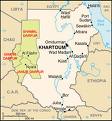
The war in Sudan's western Darfur region may be the world's bloodiest ongoing conflict -- as many as 400'000 civilians have been led to the slaughter over four years. Yet, it pales in comparison to Sudan's simmering southern civil war -- which claimed some 2million lives in the twenty-two years before the 2005 peace accord. If the international community's inaction in Darfur is horrifying, its wilful ignorance over the civil war is incomprehensible. Sudan has been the worst killing field on the planet since the Second World War, but the carnage in that country has excited far less global attention than the vastly less bloody conflict in the Middle East. The tragedy of the Middle East is that its land is coveted by too many, who contend with one another to control it; the tragedy of Sudan is that its resources are coveted by too few, so the world feels safe in turning its back on the country's fate. Why should we care about Sudan? There is the obvious argument of simple morality: we can not call ourselves a civilised people, yet become complicit through indifference in the slaughter of so many millions. There is the obvious argument of political precedence: tyrants who behold the world's acquiescence in Sudan are far more likely to terrorise their own populations because they are far less likely to fear international retribution. There is the obvious argument of regional destabilisation: an inferno of death in Sudan is unlikely to be doused by international borders. But there is also the less obvious argument of self-interest. No, Sudan does not husband a geographically strategic territory. No, Sudan does not possess decisive oil reserves. No, Sudan will not develop nuclear missiles. However, countries of lawlessness never keep their troubles to themselves; they become breeding grounds for the export of evil. It is no coincidence that Sudan was the home to Carlos the Jackal before his capture by the French; that it was home to Al-Qaeda before it decamped for Afghanistan; and that it is today the staging ground for the rebel invasion of Chad. Sudan has become the Devil's nursery, and we deceive ourselves at our own peril if we claim to believe that the deaths of our fellow human beings are no concern of ours. |
|
|
|
|















 Privacy
Policy
Privacy
Policy
 |
|
|
|
 |
|
|
Remembering Desmond Tutu |
|
|
My article in the Globe and Mail |
|
 |
|
 |
TVOntario’s The Agenda |
|
Reflecting on the life of Queen Elizabeth II |
|
|
|
 |
United Nations |
|
My address in the UN General Assembly Chamber |
|
|
|
 |
CBC Radio’s The House |
|
The dirt on the federal two billion trees programme |
|
|
|
 |
|
 |
|
 |
|
 |
|
 |
|
 |
|
 |
|
 |
|
 |
|
 |
|
 |
|
|
|