 |
 |
      |
 |
| << return | ||
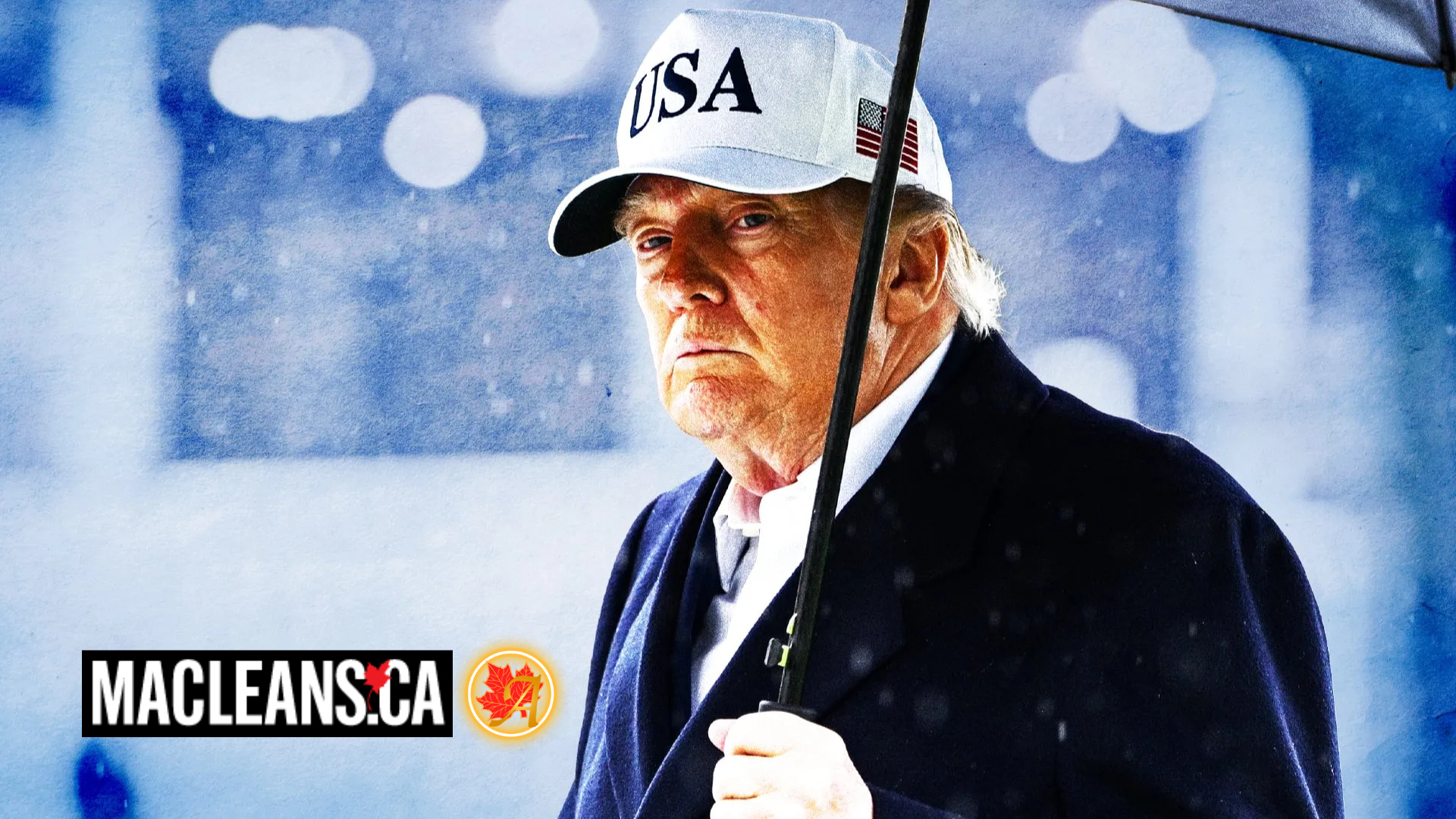
The Trade War Will Hurt the US More Than Canada "Other countries are increasingly seeing the United States as at best untrustworthy, and at worst irrational in its conduct of trade and diplomacy," writes Akaash Maharaj. |
||
28 October 2026 |
 |
|
|
In the final days of the most recent round of Canada-US trade talks this summer, a deal seemed almost inevitable. Trump was publicly declaring the deal was all but done, while Carney acknowledged substantial progress. Behind the scenes, the Americans appeared convinced that Canada simply could not afford to say “no.” People close to the American negotiating team later told me that US officials were genuinely stunned when Carney walked away. They assumed our country was so dependent on the United States that we would accept an agreement at almost any cost. It simply had not occurred to them that Canadians might be willing to endure economic pain to protect our sovereignty, or how much pain the US would inflict on itself. This is characteristic of the Trumpian brand of American exceptionalism. Throughout the trade war, Trump officials have operated on the belief that America is so large, so wealthy, and so powerful that everyone else will eventually accommodate whatever it demands, no matter how outlandish. They also seem convinced that they are immune from the adverse effects of the trade war they are waging on the world. Fortunately, Canada has specific points of leverage: cross-border trade is the foundation of the economies of several individual states. Ohio, for example, exported approximately US$18.3 billion in goods to Canada in 2025, representing nearly one-third of its total goods exports. For Maine, Montana, and Vermont, an outright majority of their international trade is with Canada. In North Dakota, meanwhile, roughly 81 per cent of goods exports went to Canada. When four out of every five export dollars depend on one trading partner, the consequences of disrupting that relationship are devastating.
Several of the contested seats in the upcoming US midterm elections are in the states hit hardest by the trade war, including Maine, Ohio, and Michigan. Last week, Senator Susan Collins of Maine announced that the Trump administration will scrap select tariffs that have been particularly damaging to the Republican Party’s chances in the state’s upcoming midterms. Most Americans, regardless of their proximity to the northern border, will not put Canada top of mind in the voting booth, but they will be thinking about affordability. And there is a general understanding in the US that the Trump administration has been mishandling the economy, even if only a growing minority of Americans are keenly aware that trade relations are driving the affordability crisis. Specific American industries are also far more vulnerable. The Canada-US auto industries, for example, are deeply integrated. Canada is the largest export market for American passenger vehicles, and the second largest for automotive parts. The US also imports about 95 per cent of its uranium, and Canada is the number-one supplier. Above all, the US has built its entire agriculture industry around access to Canadian potash. We supply nearly 90 per cent of American potash. The average American might not know what potash is, let alone where it comes from. But American agriculture depends on it, so much so that in 2025, the Trump administration declared potash to be critical to national security. But they still did not have the foresight to realise a tariff war against their main supplier of potash might have adverse consequences for them. This year, Trump grasped at other solutions for the potash problem, including importing it from Belarus, a desperate proposition not just logistically, but also politically. The United States sought to reduce its dependence on Canada -- a neighbouring democracy with a similar legal system and a deeply integrated commercial relationship -- by exploring a relationship with Belarus, an authoritarian state closely aligned with Russia, and economically quarantined from the international community. The arrangement quickly fell apart, but it was another example of Trump alienating the democratic allies the US has spent generations building relationships with, only to make his country more dependent on governments that have far fewer reasons to behave predictably or to honour American interests. This bridge-burning will be their downfall. The US has become the wealthiest and most powerful country, precisely because it has been able to draw in the resources of the entire planet, and export its products to the rest of the world. Its success relies on staying at the centre of global commerce. Trump is destroying this asset, and even when this trade war is over, the damage to America’s standing in the international system will never be repaired. In 2020, after Trump renegotiated CUSMA, he praised his own deal as the largest and fairest trade agreement in the history of civilisation, in characteristically modest style. Five years later, he denounced it, saying Canada and Mexico took advantage in every aspect of the agreement. “Who would ever sign a thing like this?” he jibed, perhaps unable to read his own signature at the bottom of the page. It is bad enough that the American president is capable of wild lurches in position on critical international agreements, but it is far worse that the political apparatus in his country has played along with him. Congress and the courts have proven timid, impotent, or complicit; that may not change with the election of a new president, from any party. In that context, other countries are increasingly seeing the United States as at best untrustworthy, and at worst irrational, in its conduct of trade and diplomacy. In the short term, this creates instability in global affairs. The IMF has not yet put a hard figure to the effects, but it has said that the tariffs have slowed global economic activity. In the long run, though, it creates opportunities for Canada. That is already part of the calculation being made by Canada and other middle-power trading partners. We are seeking new commercial relationships and ways to reduce our dependence on our biggest market, one agreement and one supply chain at a time. In turn, America’s unemployment rate and inflation will continue to rise, and their citizens will bear these costs. This is entirely predictable, and I fear entirely irrelevant to American decisionmakers. The country has lost an estimated 190'000 jobs as a result of the Liberation Day tariffs, and a collapse of CUSMA would eliminate up to 214'000 more. Canada would see a loss of 102'000 jobs. This is proportionately far higher for us, but Canada has a far more generous social safety net than the US, which makes economic stressors more bearable for our population. The Canadian population also seems more willing to endure those stressors. The tariff war is causing a surge of patriotism in Canada, and a sense of common purpose across the country. Most polling shows that 70 to 80 per cent of Canadians approve of Canada’s counter-tariffs, and that a majority of Canadians want no further concessions to the Trump administration. The backing of the population is an enormous asset, strategically. The tariffs have fostered a social consensus south of the border, too, across their bitter partisan divide, but it is one of dwindling confidence in its federal government. About 87 per cent of Democrats, 64 per cent of independents, and 54 per cent of non-MAGA Republicans oppose the US tariffs against Canada. Few Americans want to help Donald Trump economically subjugate Canada. As the US becomes a less reliable destination for international investments, Canada will become a commensurately more attractive destination. As the US becomes less willing to engage in good-faith diplomacy, Canada will have more opportunities to act as the convener and broker of international peace and development talks. When US financial and academic institutions become targets of political interference, Canadian institutions will have chances to become the venues of choice for transnational collaborations. To do so, we will first need to brave the convulsions and rage of an American political class that will be unwilling to accept the consequences of its own actions. America may be large enough to impose costs on other countries, but that does not mean it can do so without imposing costs on itself. And if America’s trade partners conclude that we can no longer rely on the United States to keep its word, we will not wait indefinitely for America to remember the value of our friendship. We will all find other friends. Akaash Maharaj is a Senior Fellow at the University of Toronto’s Munk School of Global Affairs and Ambassador-at-Large for the Global Organization of Parliamentarians Against Corruption. |
||
|
Post » Tweet this article through Twitter
|
||













 Privacy
Policy
 |
|
|
|
 |
|
|
Canada-US Tariff War |
|
|
My article in Maclean’s Magazine |
|
 |
|
 |
Global TV News |
|
My interview on the prospects for an end to the Iran-US war |
|
|
|
 |
Corus Radio |
|
My interview on Canada’s economic nuclear option |
|
|
|
 |
The Hill Times |
|
My article on the Canada-EU trade agreement |
|
|
|
 |
|
 |
|
 |
|
 |
|
 |
|
 |
|
 |
|
 |
|
 |
|
 |
|
 |
|
|
|